- Front-End Eligibility Checks: 65% of preventable denials originate during patient registration. Real-time verification stops them before submission.
- Automated Prior Authorization: Implementing 72-hour payor portal tracking reduces care abandonment and administrative backlog.
- 48-Hour Denial Turnaround: Categorizing denials with CARC/RARC codes enables immediate appeals and preserves clean cash flow.
- Continuous CPT/ICD-10 Auditing: Regular specificity audits eliminate payer recoupments and medical necessity downgrades.
- Introduction
- What is POS in Medical Billing?
- What does POS 11 Mean?
- When to Use POS 11?
- Key Features of POS 11
- Advantages of Using POS 11 in Medical Billing
- How to Use POS 11 in Medical Billing?
- Disadvantages of Using POS 11 in Medical Billing
- What are the other types of POS Codes in Medical Billing
- POS 11 vs POS 22: Comparison
- How Shoreline Medical Billing Company Optimizes POS Coding?
- FAQs About POS 11 in Medical Billing
- Frequently Asked Questions
Introduction
Accuracy and specificity are the two crucial aspects in the world of medical billing. Place of Service (POS) code is one the essential detail in claim submissions which is often overlooked. This blog provides a complete detail about the POS 11 code including its definition, purpose, proper use, advantages, disadvantages, and comparisons with similar codes like POS 22. Mastering this code is essential to avoid denials and optimize reimbursements.
What is POS in Medical Billing?
POS means Place of Service (POS). These codes consist of two-digit identifiers used to indicate the physical location where healthcare services were rendered. These codes are essential in medical billing for claim submission and reimbursement, as they help payers determine the appropriate payment structure based on the service setting.
There are four recognized levels of interoperability:
These challenges have opened the door for practices to outsource the billing services to experienced medical billing companies. We at Shoreline Medical Billing company can provide the expertise and efficiency needed to optimize revenue cycle management.
These codes were formed by the Centers for Medicare & Medicaid Services (CMS) to standardize claim submissions and ensure accurate reimbursement across diverse healthcare settings. It was made as part of the Healthcare Common Procedure Coding System (HCPCS) to provide insurers with clear information about the location of the service. The main purposes include:
- ? The Regulators, such as CMS, HIPAA, and other private payers, keep on updating their guidelines by the latest factors. Therefore, the billing landscape is continuously changing and evolving.
- ? The major task in billing is understanding the correct usage of ICD-10 and CPT codes. Getting these codes correct is crucial for accurate billing, which on the other hand may lead to reduced cash flow.
- ? Some processes may require obtaining prior authorizations while handling denials and managing appeals, which may need specialized knowledge and efficiency.
- ? The rise in high-deductible health plans has increased more payment responsibilities onto patients. Consequently, there is now more pressure on healthcare professionals to get money straight from patients.
What does POS 11 Mean?
According to CMS, POS 11 is defined as:
—Office Location, other than a hospital, skilled nursing facility, military treatment facility, community health center, or intermediate care facility, where the health professional routinely provides evaluation and management services.— This code is typically applied to outpatient services that includes routine check-ups, consultations, minor procedures, and diagnostic tests performed in a non-hospital.
When to Use POS 11?
We can use the code POS 11 for the following conditions:
- When services are rendered in a privately owned or leased office space.
- Where the provider is fully responsible for the entire overhead costs including staff, equipment and other utilities.
- When there is no bill raised separately for the facility fee.
- The office is not affiliated with any hospital or institutional setting.
Key Features of POS 11
Some of the key features of using the code includes:
POS 11 was specifically created to distinguish between office-based care from hospital-based or facility-based services. By identifying the care setting, insurers might adjust the payments according to the operational costs associated with different environments. For example, when a service is availed at the physician's office the total overhead cost is less compared to the same service offered in an outpatient department of a hospital. We code POS 11 for the office setup and POS 22 for the hospital. And the provider using POS 11 gets higher reimbursement. The CMS has also updated the POS codes for evolving healthcare delivery models, such as telehealth (POS 02 and POS 10), to ensure the system remains relevant.
- Setting: When the Physician-owned offices or independent clinics not affiliated with a hospital.
- Services: They can be used for walk-in services like routine medical check-ups, preventive care, minor procedures, and disease management.
- Reimbursement: Using POS 11 has higher reimbursement rates compared to the facility-based settings due to lower overhead costs.
- Ownership: The practice should be owned and operated by a physician or physician group, not a hospital.
Advantages of Using POS 11 in Medical Billing
POS 11 offers several benefits for healthcare providers, patients, and billing teams. These advantages help to increase the operational efficiency and maintain the financial stability.
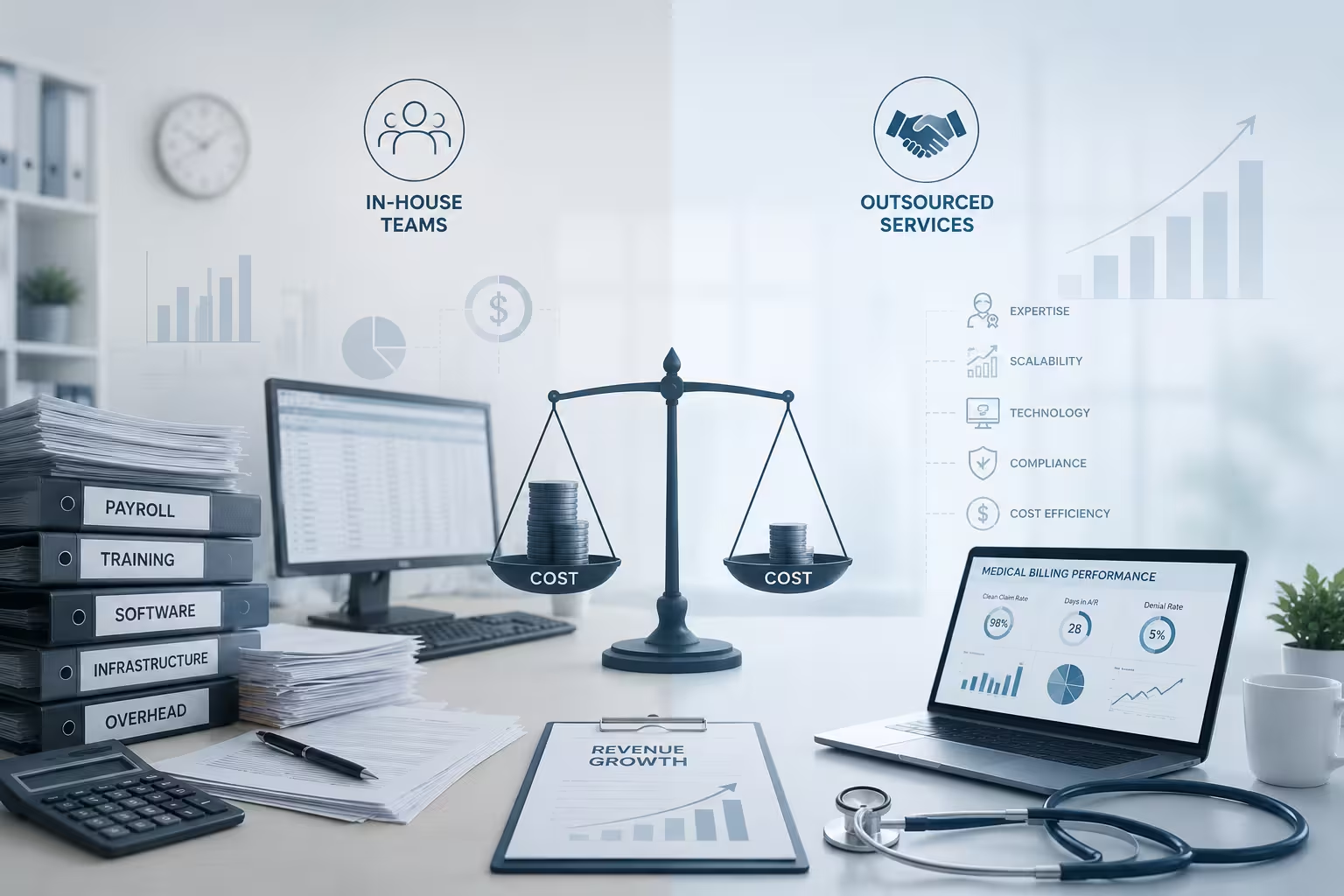
Huge investments are required to have an in-house billing team. The various factors for cost considerations are
These expenses might be difficult for small and mid-sized practices. Managing an in-house team also adds to administrative burdens, reducing operational efficiency.
Shoreline's cost-efficient model is tailored for every service. It ensures that you pay only for what you need, helping you to build financial stability without compromising on billing accuracy or compliance. We also provide billing software and EHR integration without any additional cost to all our clients across the specialties.
- Higher Reimbursement Rates: Services that are billed under POS 11 typically receive higher payments from Medicare and other private insurers. Because the insurance always considers the overhead costs involved in a private set-up, unlike the hospital-based settings where facility fees are billed separately.
- Streamlined Workflow: In an Office-based care the billing procedures are simple with better documentation and continuity of care. This reduces the administrative burdens and allows staff to focus on patient care.
- Cost-Effectiveness for Patients: These lower operational costs involved in office settings, can reduce the out-of-pocket expenses for patients.
- Better Patient Experience: Compared to hospital settings, visiting a doctor in their office offers patients a more convenient and personalized setting, which elevates patient satisfaction level overall.
- Decreased Claim Denials: We can assure seamless revenue cycles and reduce the possibility of claim rejections by correctly utilizing POS 11.
How to Use POS 11 in Medical Billing?
Keeping these advantages in mind we will see how to use the code correctly to get timely reimbursements. Verification of the service location and checking for the latest CMS guidelines and payer policies is the first and foremost step to follow while using the POS 11. Let's see in detail
We at Shoreline Medical Billing company , specialize in helping providers navigate the complexities of POS coding. Our team ensures that all claims are submitted accurately, reducing denials and optimizing revenue.
- ? Make sure that the service was provided in a physician's office or an independent clinic, and not in a hospital or facility-based setting.
- ? Verify whether the practice is independently owned and operated by the physician, and not affiliation with the hospital. The provider must solely cover all the expenses that occurs such as payment of rent, staff salaries, and maintenance costs for equipment.
- ? When submitting claims with POS 11, we should always use the CMS-1500 form or an electronic version of it.
- ? Some insurers may have special rules for using POS 11, so be careful to check with the payers in advance for any needs or suggestions.
- ? To support the usage of POS 11 and prevent audits, always take thorough and understandable notes that include the service location, date, and type of visit.
Disadvantages of Using POS 11 in Medical Billing
While POS 11 offers many significant benefits, it also has some disadvantages that we should take care of
- Compliance Requirements: Providers must ensure their office meets criteria mentioned by CMS for POS 11, which includes independent ownership and operation. This helps to avoid audits or penalties.
- Documentation Standards: Thorough documentation is required to justify POS 11 usage which increases the administrative workload.
- Risk of Misuse: By applying POS 11 to services provided in a hospital-owned clinic or other non-qualifying settings we risk ourselves to claim denials or audits.
- Access to Specialized Equipment is limited: Unlike hospital settings (POS 22), physician offices may lack advanced medical technology, which limits the procedures that can be performed in the setup.
- Training Needs: Billing staff must be regularly trained to stay updated with POS 11 guidelines and other payer policies, which increases the expenses.
What are the other types of POS Codes in Medical Billing
There are two categories facility and non-facility codes. Each code corresponds to a specific care setting.
| Facility POS Codes: These codes are applied to institutional settings with higher operational costs, such as hospitals and skilled nursing facilities. | Non-Facility POS Codes: These codes are appled to settings with lower overhead costs, such as physician offices or home care. |
| POS 21 Inpatient Hospital | POS 01 Pharmacy |
| POS 22 Outpatient Hospital | POS 02 Telehealth |
| POS 23 Emergency Room in Hospital | POS 10 Telehealth (Patient's home) |
| POS 31 Skilled Nursing Facility | POS 12 Home |
| POS 19 Off-Campus Outpatient Hospital | POS 15 Mobile Unit |
POS 11 vs POS 22: Comparison
| Feature | POS 11 (Office) | POS 22 (Hospital Outpatient) |
|---|---|---|
| Ownership | Provider-owned | Hospital-owned |
| Location | Independent office | On-campus hospital department |
| Reimbursement Rate | High | Low |
| Billing Structure | Single claim | Split billing (provider + facility) |
| Overhead Responsibility | Provider | Hospital |
| Common Services | Routine exams, minor procedures | Advanced diagnostics, outpatient surgeries |
How Shoreline Medical Billing Company Optimizes POS Coding?
We at Shoreline Medical Billing company , have a specialized team of certified medical billers and coders who are updated with all the latest CMS guidelines and payer policies, enabling us to offer customized solutions for all whether be a small practices or large healthcare facilities.
By partnering with Shoreline Medical Billing company , healthcare providers can focus on delivering quality care while we handle the complexities of medical billing.